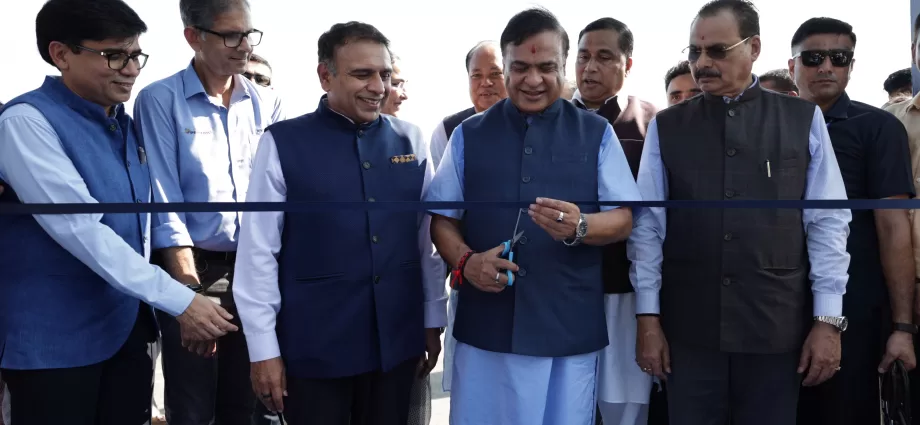
Guwahati, September 10: PepsiCo India has inaugurated its state-of-the-art foods manufacturing facility in Nalbari, marking the company’s first foods manufacturing plant in Assam and its fifth such facility in India.
The greenfield facility, built with an investment of ₹778 crore, is spread across 44.2 acres and is expected to strengthen food manufacturing, agricultural value chains and economic activity in Assam and the wider Northeast.
Assam Chief Minister Dr. Himanta Biswa Sarma, who attended the event as the chief guest, inaugurated the facility in the presence of PepsiCo India & South Asia CEO Jagrut Kotecha, Assam ministers Jayanta Mallabaruah and Biswajit Daimary, MLAs Chandra Mohan Patowary and Narayan Deka, senior government officials, industry partners, farmers and members of the local community.
The facility will manufacture popular PepsiCo brands including Lay’s and Uncle Chipps, expanding the company’s foods manufacturing network across Northeast India and West Bengal. The investment is part of PepsiCo India’s broader commitment to invest ₹5,700 crore in India by 2030.
Dr. Himanta Biswa Sarma said the inauguration marked another important milestone in Assam’s industrial growth story. He said the investment reflected growing confidence among global companies in Assam’s policies, infrastructure and workforce, while creating opportunities for farmers, women and local enterprises.
Jagrut Kotecha said Assam’s agricultural base, improving infrastructure and growing economic importance made the state a natural choice for PepsiCo’s next phase of expansion. He added that the facility would create a positive impact across the value chain, benefiting farmers, local businesses, women, young professionals and communities.
The Nalbari plant is expected to support more than 5,000 farmers through demand for chip-grade potatoes over the coming years. PepsiCo currently works with more than 600 farmers in Assam and provides support through seeds, agronomy, technology, training and market access.
The facility has generated around 700 direct and indirect employment opportunities, while also creating business prospects for MSMEs, logistics, warehousing, packaging and ancillary industries. PepsiCo aims for women to constitute more than 75% of the plant’s workforce.
The plant also incorporates sustainability measures, including a rice-husk-based biofuel system, solar power, water recovery and rainwater harvesting. It currently has 1.2 MWp of rooftop solar capacity, with plans to expand this to 1.9 MWp.
PepsiCo has also introduced two electric container trucks in Assam, supported by a dedicated charging station at the facility, as part of its efforts to reduce fleet emissions.
